
Many patients want to know what will happen and when before undergoing treatment. A clear step-by-step description helps them better understand the process.
Visual Illustrations
Where appropriate, schematic illustrations supplement the textual explanations. They are intended to illustrate individual treatment steps and do not constitute a guarantee of results.
This page explains the following aspects of the treatment process:

Overview: The Wound Contraction Treatment Process
The treatment is carried out in several stages and usually takes 3–4 months. Appointments are typically scheduled 3 weeks apart, making the treatment process easy to plan.
1. Removal of the Skin Cancer
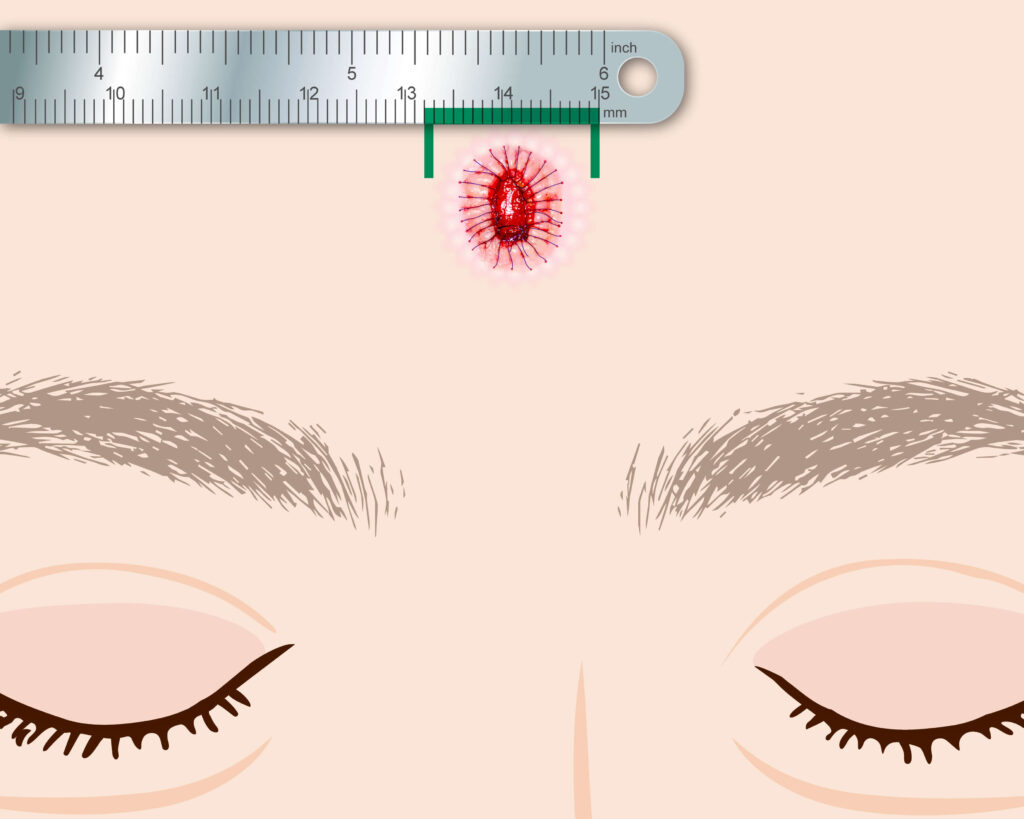
To ensure that the tumor has been completely removed, we also take very thin strips of skin from the edges of the wound, known as margin samples, for histopathological examination in the pathology laboratory (see “Understanding Skin Cancer”).
For better orientation, the wound is divided into four sections, like the face of a clock: from 12 to 3 o’clock, from 3 to 6 o’clock, from 6 to 9 o’clock, and from 9 to 12 o’clock. This allows the pathologist to determine exactly which area of the wound each sample came from.
An additional tissue sample is taken from the deepest part of the wound. All samples are examined to determine whether any cancer cells remain or whether the tumor has been completely removed (see “Understanding Skin Cancer”).
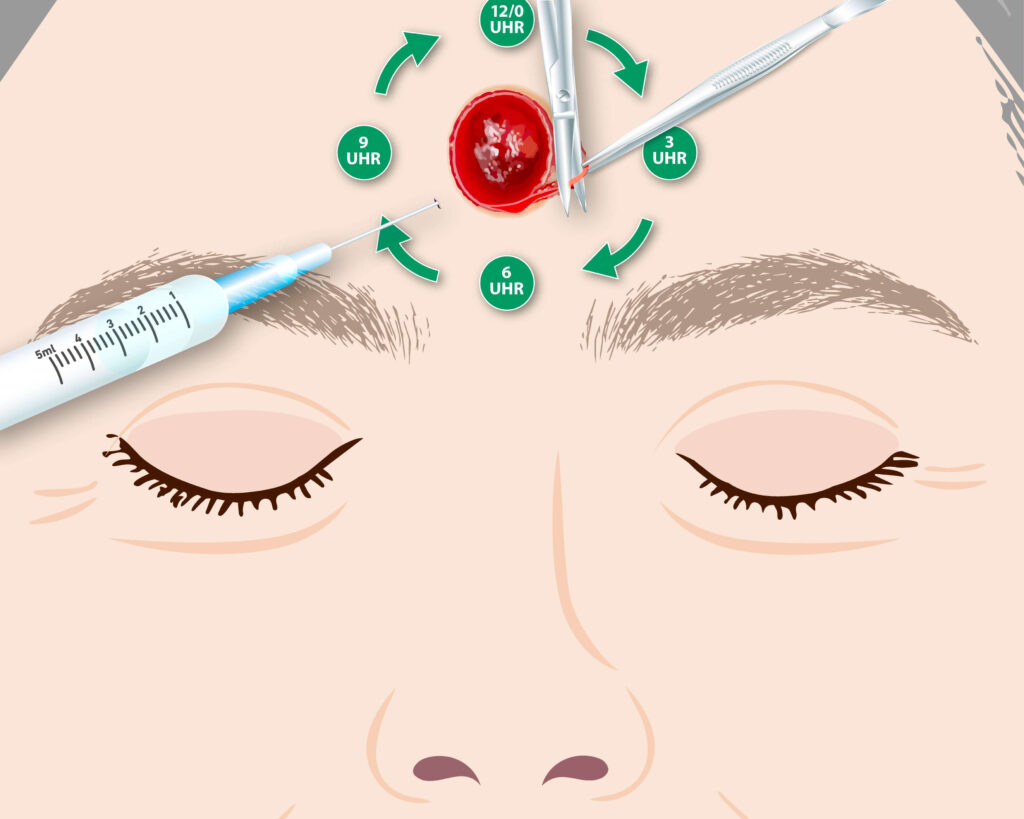
Figure 1: The skin cancer is removed with a surgical margin of approximately 3 mm all around the visible tumor. In addition, tissue samples are taken from around the excised area, appropriately labeled, and examined under a microscope. This allows for a precise determination of whether the tumor has been completely removed.
Since the wound initially remains open or is only temporarily dressed, additional tissue affected by cancerous spread can be removed precisely at the affected site if necessary. This allows for particularly precise and safe work until tumor clearance has been confirmed.
1.1. Initial controlled approximation of the wound edges during skin cancer removal
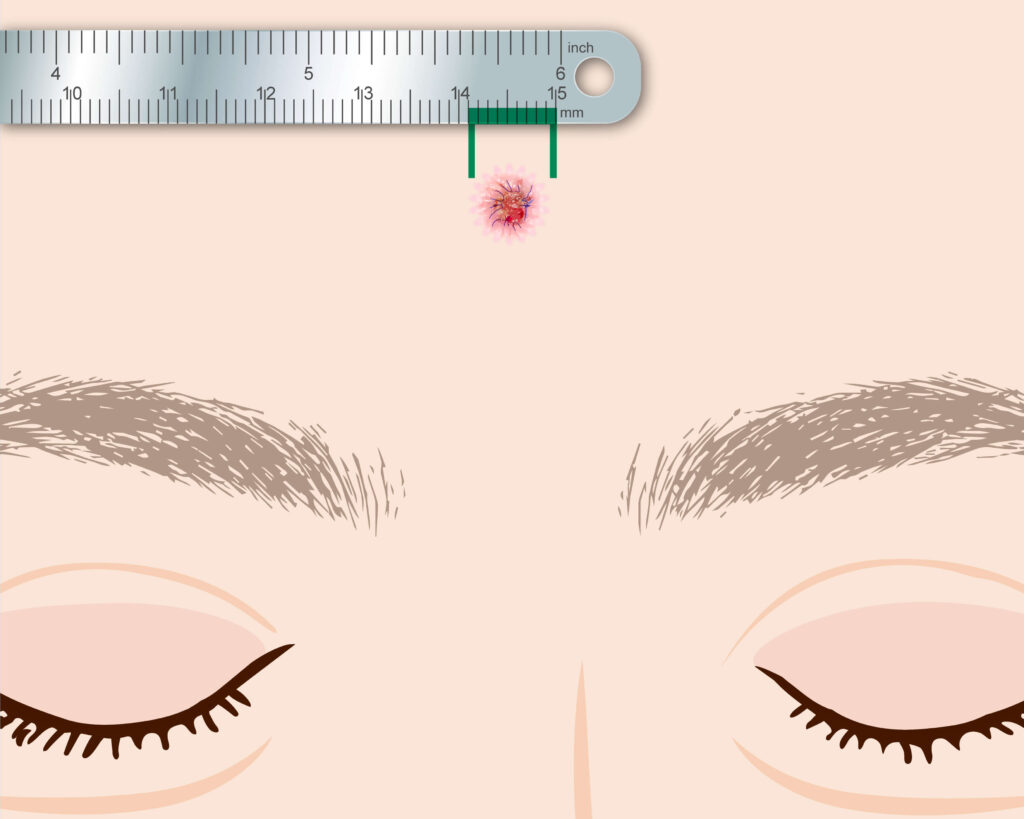
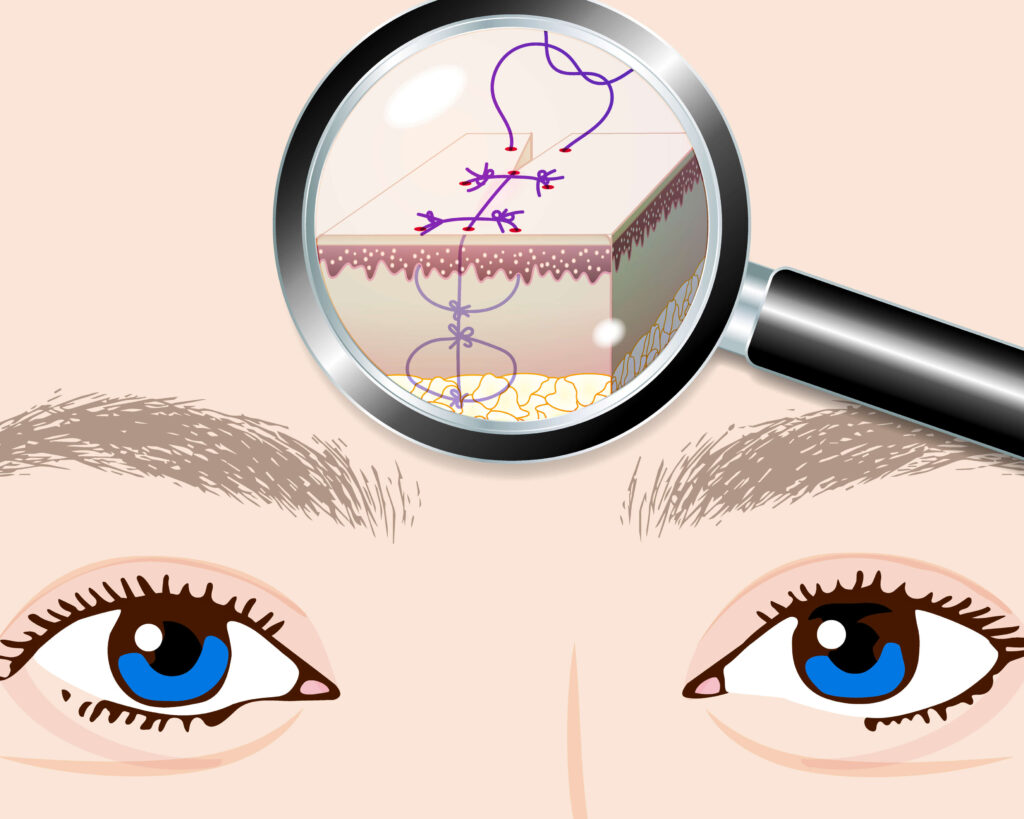
Right from the start, the wound can be reduced symmetrically and circumferentially by up to 5 mm (Figure 2). This is achieved using a special suturing technique (cuticular purse string suture) that brings the skin together without placing it under excessive tension. This cuticular purse string suture typically remains in place for 3–4 weeks and allows for an initial approximation of the wound edges.
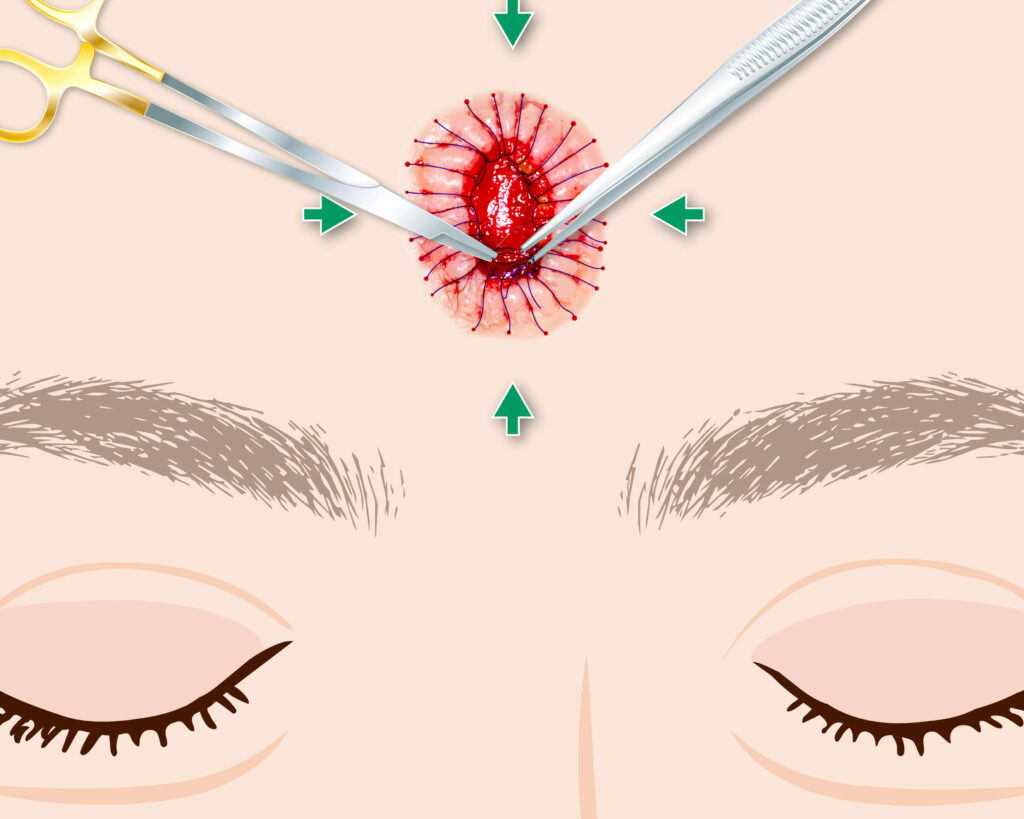
Figure 2: A cuticular purse string suture (a suture placed all the way around the wound) leads to a significant reduction in wound size right from the first step.
2. Further gradual approximation/gentle wound closure
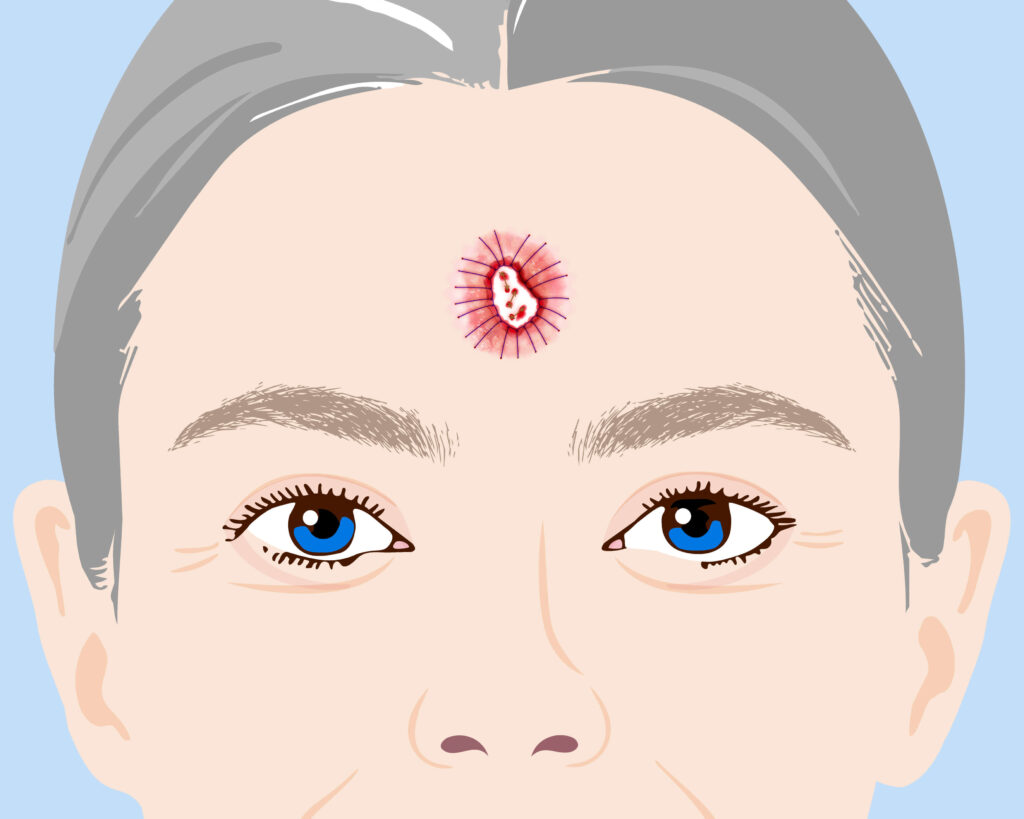
In the following weeks, the wound is brought together in 2–3 additional small steps. This approach allows the skin to adapt slowly.
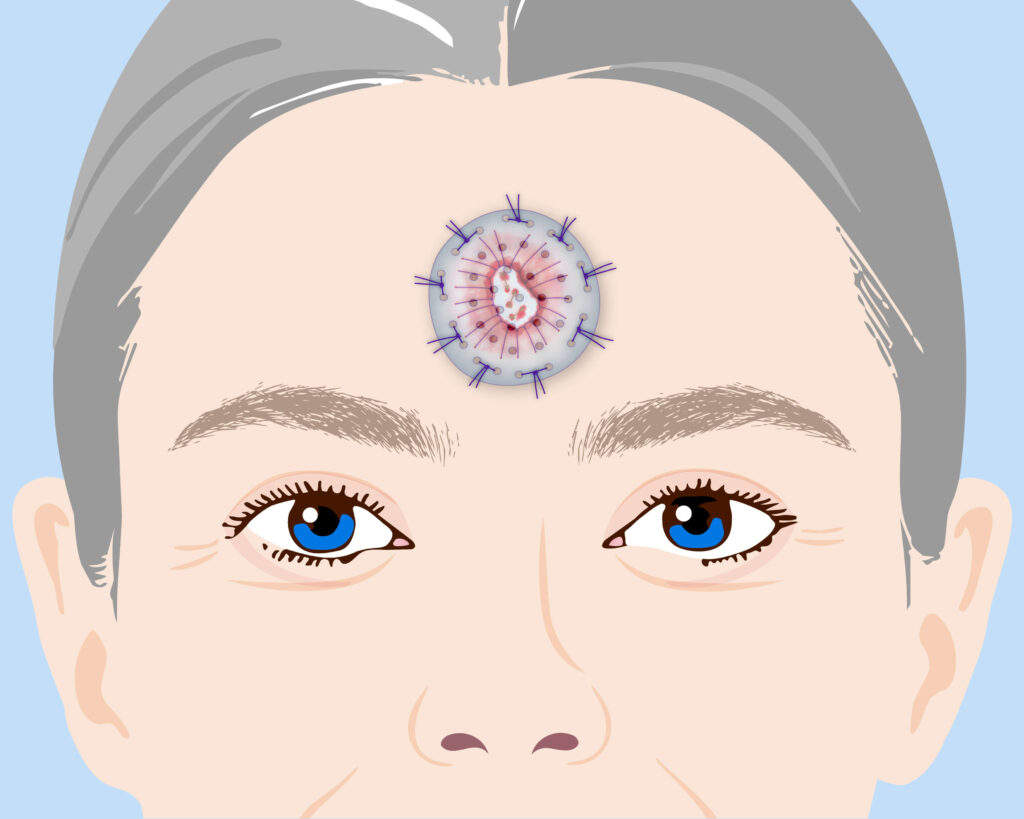
These procedures are also performed under local anesthesia, are usually brief, and reduce the size of the wound bit by bit. For larger wounds (approx. 2–4 cm), an absorbable membrane is additionally cuticular purse string sutured in place as a protective barrier (Figures 3–4). This membrane is penetrated by the body’s own skin cells and replaced by the body’s own tissue. This membrane can also be used on its own, but it leaves a broad, depressed scar. This is where surgical wound contraction comes into play, bringing the skin edges directly together and thereby minimizing the scar.
3. Final Stage and Secure Wound Closure
Once the wound has been sufficiently reduced in size, the final secure wound closure is performed (Figures 5–7). Depending on the situation and the size of the wound, a separate session involving the application of a cuticular purse string suture may not be necessary.
Timeline and Appointments
The entire wound closure process typically takes 12 to 16 weeks. The number of steps required and the intervals between them depend, among other things, on the size and location of the wound, the individual’s skin condition, and the healing process.
The process is always planned on an individual basis.
Pain and Anesthesia
All treatment steps are generally performed under local anesthesia. Therefore, patients usually do not experience any pain during the procedures. The sessions initially last about 45 minutes and then typically about 30 minutes. Immediately afterward, patients leave the office and can often resume their daily activities.
Special Considerations Between Surgical Treatment Steps
Leaving the wounds partially open usually does not cause any problems as long as certain precautions are taken: Activities in dusty environments should be avoided during treatment, but especially during the first 2 months. Swimming is also not recommended, particularly in heavily chlorinated pools. Intense sun exposure is not conducive to wound healing, especially since it can increase the risk of developing additional skin cancers.
Patients generally cover the wound with an adhesive dressing during the first 2–3 weeks. After that, patients generally feel comfortable enough with the appearance of the wound that a dressing is almost always no longer necessary.
What to Expect Next
On the next page, you’ll find a factual overview of the benefits, assessment, and limitations of the method
Medical Information: Dr. med. Dr. med. dent. Andreas Born