
Following a diagnosis of skin cancer (Figure 1), the priority is the complete removal of the tumor. However, how the resulting wound is subsequently treated can vary—especially on the face and scalp.
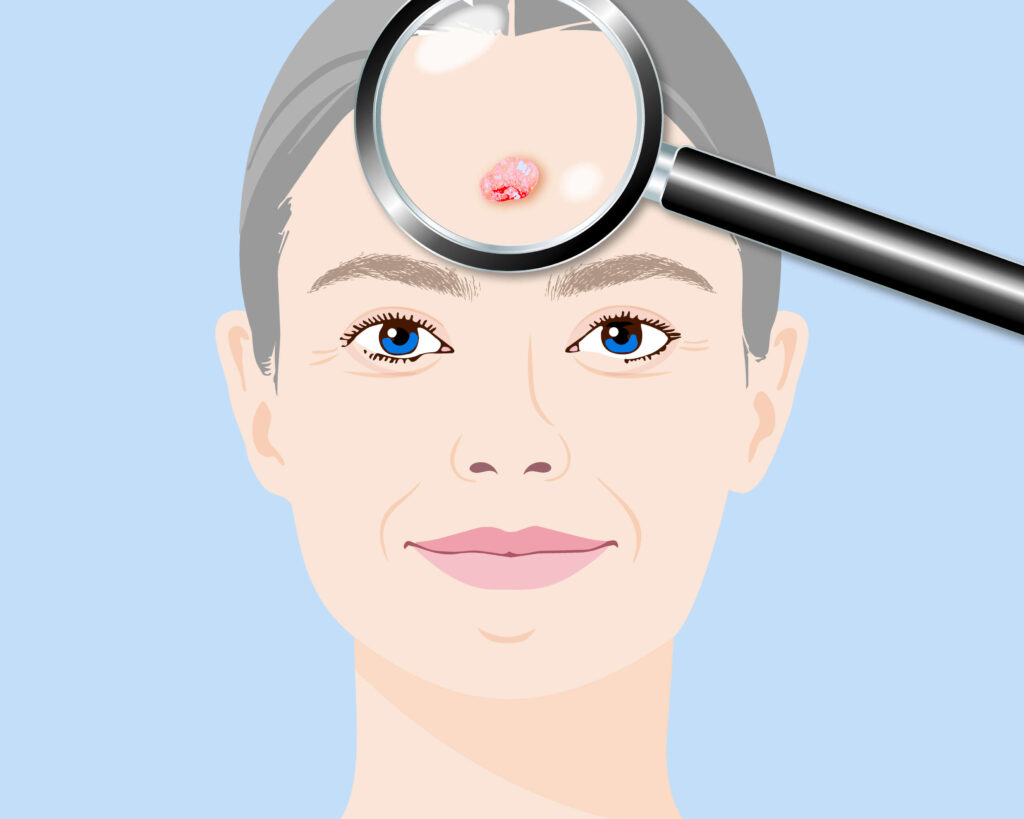
Figure 1: Not every small skin bump is harmless: In sun-exposed areas such as the forehead, it may actually be a form of basal cell carcinoma.
Since tumor cells can spread beyond the visibly affected area, it is sometimes necessary to perform a second surgery to remove additional tissue (secondary resection). As a result, the resulting defect after tumor removal may be larger than originally expected.
In surgical treatment, the main problem is usually not the removal of the affected area of skin, but rather the subsequent closure of the wound. If the resulting skin defect—depending on its location—is larger than about 1 to 2 cm, the wound often cannot be simply sutured closed.
In such cases, a plastic flap is required. This involves moving skin from the immediate vicinity or nearby area to close the defect (known as a “flap”). This procedure is referred to as a plastic surgery technique (Figure 2).
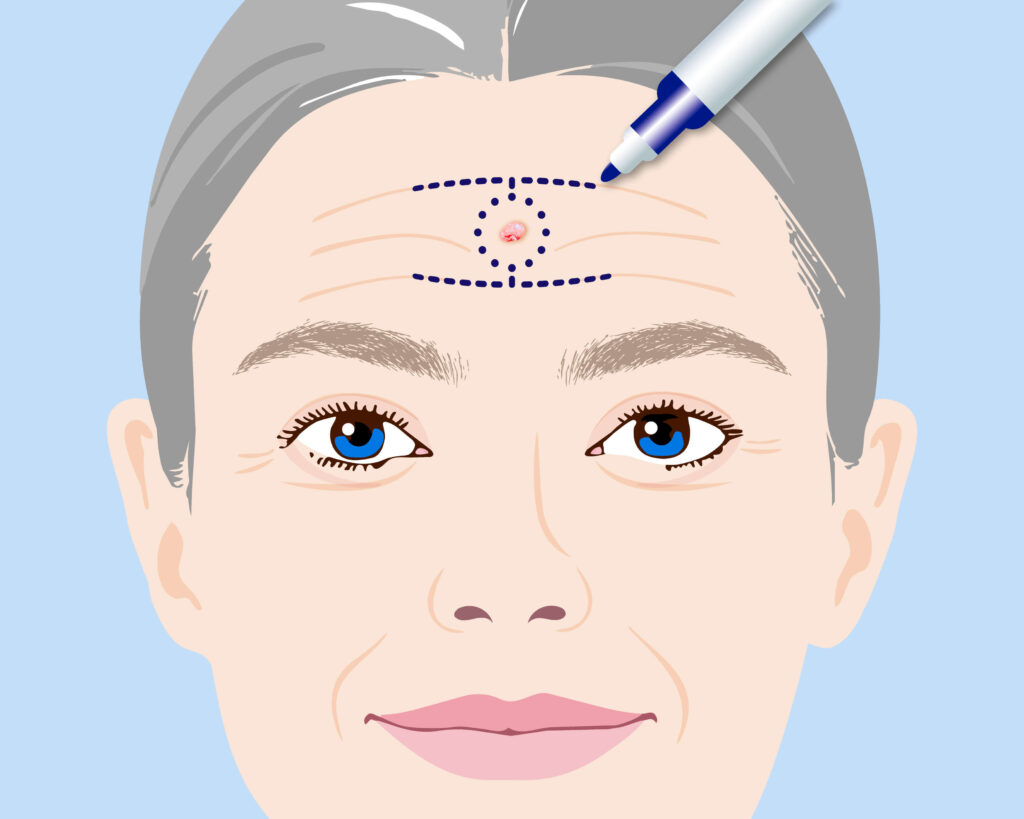
Figure 2: The dotted circle indicates the safety margin with which the tumor is removed. The horizontal dashed lines mark the planned incisions and the resulting scars. This allows the skin to be repositioned so that the wound can be closed effectively afterward.
Below you will find more detailed information:

Standard plastic surgery techniques for tissue coverage—a brief explanation
In standard plastic surgery procedures, the wound is often closed after tumor removal using skin flap or skin transfer techniques.
In these procedures, skin is detached from adjacent areas and repositioned so that the defect can be completely covered immediately. These techniques are medically proven and, especially for larger defects, typically allow for rapid and stable wound closure in a single session.
Why Traditional Techniques Can Be Challenging on the Face
Traditional plastic surgery techniques may require additional incisions and greater mobilization of the surrounding skin. However, this increased complexity is associated with more scarring and potential complications such as impaired wound healing, postoperative bleeding, etc.
On the face—specifically the forehead, nose, eyelids, or scalp—the skin is often less mobile and tightly attached to the underlying structures.
Immediate closure of a large area in these areas can present specific challenges, such as:
- Greater tension on the surrounding skin
- Visible scars or distortion
- Cosmetic impairments due to excessive scar tissue
- Possible functional impairments in adjacent areas
- Necessary corrective surgeries
These factors may play a role in selecting the appropriate method.
Standard procedures—classified by type
Standard plastic surgery procedures may require additional incisions and greater mobilization of the surrounding skin. In many cases, these procedures are appropriate and medically necessary.
However, in functionally and aesthetically sensitive areas, the resulting tension on the surrounding structures can pose a particular challenge. It is precisely in these cases that a step-by-step approach can serve as an alternative when appropriate.
References:
Weerda, H. (1999): Plastisch-rekonstruktive Chirurgie im Gesichtbereich. Ein Kompendium für Problemlösungen. Thieme Verlag, Stuttgart, New York
Menick, F. (2009): Nasal Reconstruction. Art and Practice. Mosby Elsevier Missouri
The basic principle behind this minimally invasive alternative: Surgical wound contraction
After the complete removal of skin cancer, the resulting defect is often larger than initially expected. This is because tumor extensions can extend beyond the visible lesion.
The alternative method presented here addresses this issue. Instead of immediately closing the defect with additional incisions and extensive mobilization of the surrounding skin, the wound is brought together gradually and in a controlled manner. That is why we call it surgical wound contraction.
The key idea here is to give the skin time to adapt and to avoid additional incisions as much as possible.
What is the difference?
The difference from standard surgery lies not so much in the goal of achieving the fastest possible healing, but rather in the approach used to achieve it, which is generally associated with significantly less scarring. This step-by-step approach can:
- reduce tension on the skin,
- lessen the pull on adjacent structures,
- support the skin’s natural adaptation.
This can be particularly beneficial in functionally or aesthetically sensitive areas.
Who may be a candidate for this minimally invasive alternative to wound contraction
This method may be considered in particular when:
- the skin cancer is located on the face or scalp,
- immediate closure of a large area would require extensive surgical intervention,
- a minimally invasive approach is desired.
A doctor will always evaluate whether it is appropriate in each individual case.
Notes on This Method
Stepwise surgical wound contraction is not an aesthetic or cosmetic treatment.
The goal is medically safe and functionally sound wound closure under conditions that are as gentle as possible.
Surgical Wound Contraction: A Summary
The method described here is a gentle alternative in which:
- Scarring is minimized
- Wound healing complications are rare due to the tissue-sparing contraction
- The increased time required is more than offset by the long-term benefit of reduced scarring.
The appropriate method is determined on a case-by-case basis based on the individual medical situation and the patient’s needs.
References:
Born, A., Markmann, H.-U. (2021): Zahnärztliche Geweberegeneration und Wundbehandlungstechniken. Mal ganz anders. PIP: 4, 14 -17
Born, A. (2022): Die Versorgung von tumorchirurgisch bedingten Gesichts- und Kopfhautdefekten, ein alternatives Praxiskonzept anhand von Fallvorstellungen. MKG-Chirurg 2022
Born, A., Markmann, H.-U. (2024): Plastic Coverage of a Lentigo-Maligna Defect in the Cheek, an Alternative Practice Concept. Volume 24, Issue 1, Compilation 1.0
What to Expect Next
On the next page, you’ll find a structured overview of the treatment process—from the removal of the skin cancer to the completion of wound healing.
Medical Information: Dr. med. Dr. med. dent. Andreas Born